 7132 178 St NW,
 Call us:

 Call us780-809-1056
- Mail usinfo@inspecus.ca
- Schedule An Inspection
Call us780-809-1056

Are you currently house hunting in Edmonton? Whether you're eyeing a charming heritage home in Strathcona or a sleek new build in Windermere, the excitement of a new home can quickly turn into a headache if you don’t know what’s hiding behind those freshly painted walls.
Buying a home is likely the biggest investment you'll ever make. In Alberta's unique climate, where the temperature can swing 40 degrees in a single week, your home's structure and systems are under constant stress. That’s why a professional home inspection isn't just a "good idea": it’s your most powerful tool for protecting your family and your wallet.
At InspecUs, we’ve spent over 10 years navigating the attics and crawlspaces of Edmonton and surrounding areas like St. Albert and Sherwood Park. We know exactly what to look for, from the subtle signs of foundation shifting to hidden moisture issues that only a thermal camera can spot.
In this guide, we’re breaking down everything you need to know about pre-purchase home inspections in Edmonton so you can sign those papers with total confidence.
Let’s be real: inspecting a home in Alberta is a different beast than inspecting one in Vancouver or Toronto. Our "freeze-thaw" cycles are brutal. When water in the soil freezes, it expands; when it thaws, it contracts. This constant movement puts immense pressure on foundations, leading to the cracks and settlement issues we regularly find during our inspections.
When you hire our team, you’re not just getting a quick walk-through. We provide a comprehensive home inspection that covers over 100 individual items. Our goal is to give you a complete "health check" of the property.

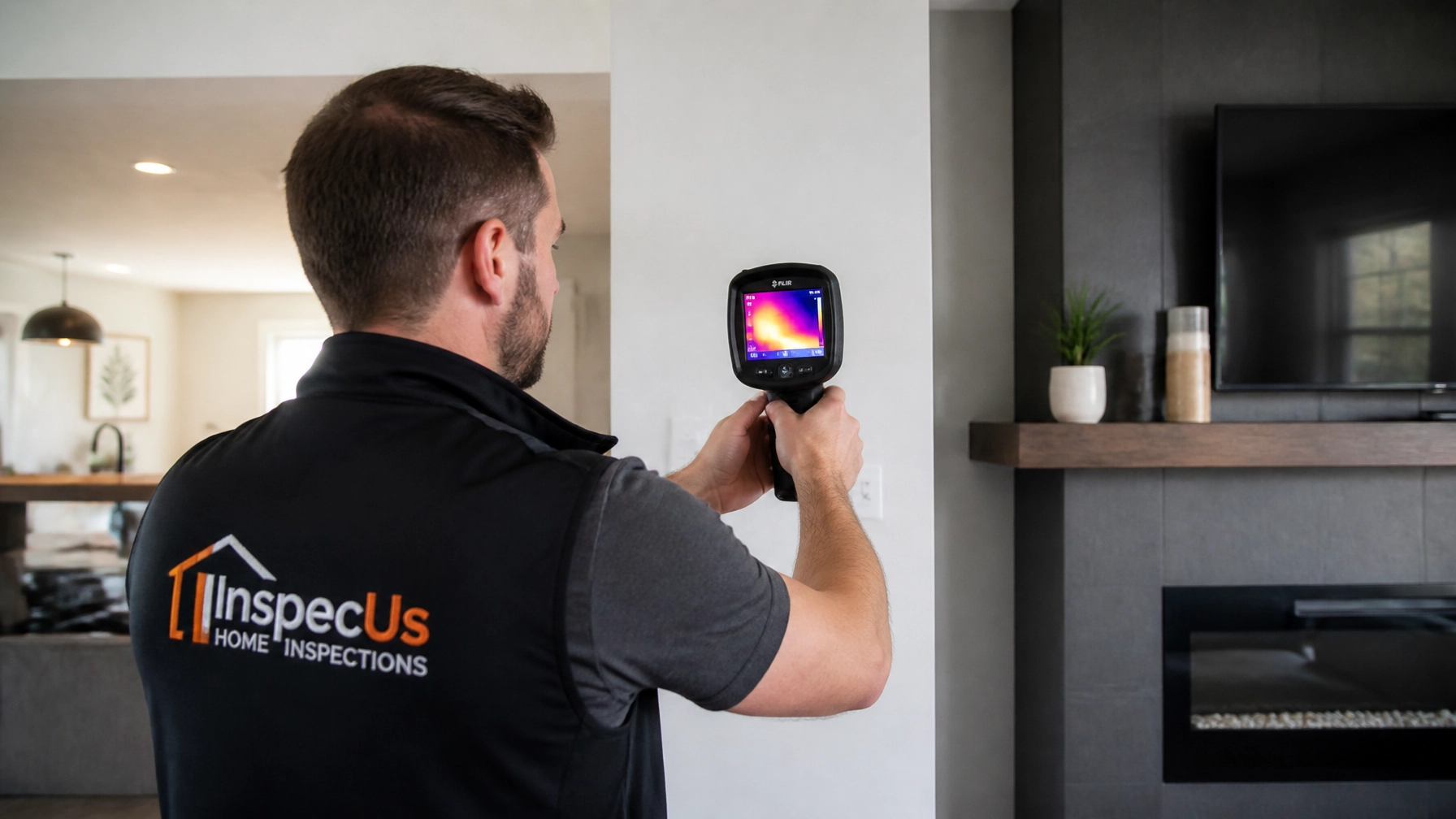
Pro Tip: Every one of our reports includes thermal imaging and moisture detection at no extra cost. This allows us to "see" temperature differences that indicate missing insulation or hidden leaks that aren't visible to the naked eye.
In today's market, a visual-only inspection just doesn't cut it. Technology has changed the game, and at InspecUs, we use the best tools available to ensure nothing is missed.
Thermal imaging is our "secret weapon." It allows us to find cold spots in walls (missing insulation) or hot spots in electrical panels (overloaded circuits). More importantly, it helps us identify moisture behind drywall before it turns into a major mold problem.
If you're buying an older home in an established Edmonton neighborhood, a sewer scope inspection is a must. We feed a high-resolution camera into the main sewer line to check for tree root intrusions, bellies (sags), or collapsed pipes. Fixing a main sewer line can cost upwards of $10,000: knowing the condition beforehand can save you a fortune.

We know that real estate moves fast. If you have a 7-day inspection condition, you don't have time to wait a week for a report.
Here’s the thing: No house is perfect. Even a brand-new build will have a few "defects" on the report. The key is distinguishing between maintenance items and deal-breakers.
When we find these issues, we explain them in plain English. We’ll tell you why it matters and what the next steps should be. This gives you the leverage to go back to the seller and negotiate a repair, a price reduction, or, in some cases, to walk away if the risk is too high.

In 2026, most quality inspections in the Edmonton area range between $400 and $700. The price varies based on the size of the home, its age, and whether you add specialized services like a sewer scope or mold testing.
A thorough inspection of a standard single-family home usually takes 2.5 to 4 hours. If an inspector claims they can do it in an hour, they are likely cutting corners.
Absolutely! We encourage our clients to join us for the final 30 minutes. This allows us to walk you through the property, show you any concerns in person, and teach you how to operate key systems like the main water shut-off and the electrical panel.
Yes. We often find "possession day" issues in new builds: missing attic insulation, reversed plumbing lines, or structural oversights. Having an independent, third-party report is essential for your Alberta New Home Warranty claims.
Yes! If you've found the perfect home but it smells like a pack of cigarettes or has a musty basement, we offer ozone treatment and odor removal to sanitize and refresh the air.
Buying a home is stressful, but your inspection shouldn't be. Our team is here to give you the facts, the photos, and the confidence you need to make the right choice for your future.
Whether you're a first-time buyer or a seasoned investor, we're the home inspectors Edmonton trusts for thorough, unbiased, and professional service.
Don't leave your investment to chance. Contact InspecUs today to book your inspection or get a free quote!
We are licensed by the Licensed Professional and certified through InterNACHI

InspecUs Home Inspection is certified in the best practices established by Internachi. Our commitment to safety includes maintaining a 6-foot distance and using personal protective equipment (PPE) during all inspections.

© 2024 InspecUs - All Rights Reserved. | Sitemap | Developed by Integrated Marketing Platform Inc.