 7132 178 St NW,
 Call us:

 Call us780-809-1056
- Mail usinfo@inspecus.ca
- Schedule An Inspection
Call us780-809-1056

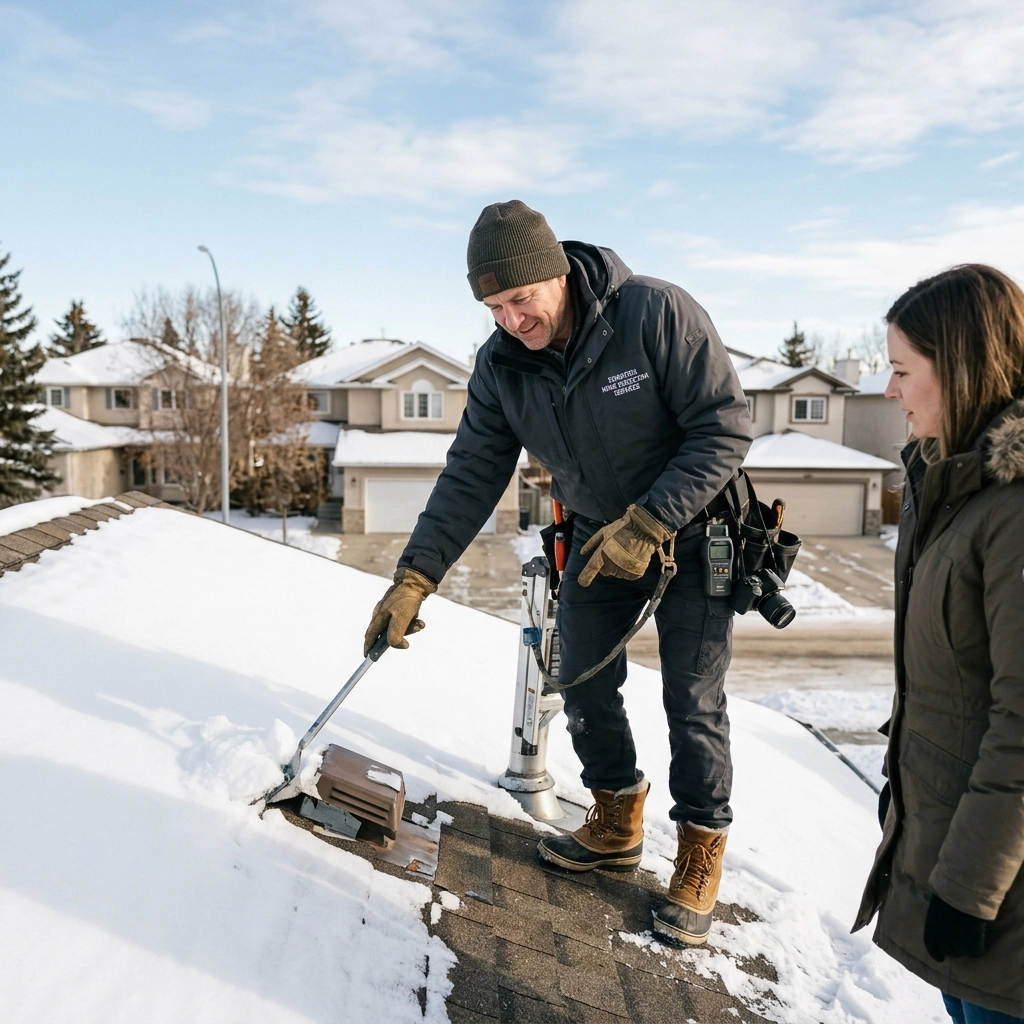
Buying or selling a home in Edmonton during the dead of winter? You’re likely staring at a roof covered in six inches of snow and wondering, "How on earth can anyone tell if that’s in good shape?"
It’s a valid concern. In our neck of the woods, the roof is your home’s first line of defense against some of the harshest weather in North America. At InspecUs, we’ve inspected thousands of properties across Alberta, and we’ve heard every variation of this question. The truth is, while snow makes things tricky, a professional home inspector in Edmonton knows that the shingles are only half the story.
When the roof is white, we go looking for the "tells" that the average person might miss. Here’s the thing: a roof isn’t just a layer of asphalt; it’s a complex system of ventilation, insulation, and structural integrity.
Let’s break down how we evaluate roof longevity when the shingles are hiding, and what you need to know about Alberta’s brutal climate cycles.
If you lived in California, your roof's biggest enemy would be UV rays. In Edmonton, our roofs deal with a "triple threat": heavy snow loads, violent freeze-thaw cycles, and the dreaded ice damming.
Edmonton is famous for those weeks where it’s -25°C on Tuesday and +4°C by Friday. This cycle is brutal on roofing materials. When snow melts during a warm spell, the water runs down to the colder eaves and refreezes. This creates a block of ice that prevents further meltwater from draining. That water then backs up under the shingles, freezes again, and expands. This process literally pries your roof apart over time.
We aren't just looking at the surface. Our team looks for signs of sagging or structural stress. A heavy snow load on a poorly framed or aging roof can lead to interior ceiling cracks or, in extreme cases, structural failure. When we perform a pre-purchase home inspection in Edmonton, we’re checking the "bones" of the roof as much as the skin.

When a roof is covered in snow, we don’t just shrug our shoulders and move on. We treat the attic like a "black box" flight recorder. Everything that is happening on top of the roof leaves a footprint inside the attic.
This is arguably more important than the age of the shingles. If an attic isn't vented properly, heat from the house gets trapped. This warms the roof deck, melts the snow from the bottom up, and causes ice dams. We check for:
During an Edmonton winter, a failing roof system will often show frost on the underside of the roof sheathing. If we see heavy frost or dark water staining on the wood, we know there’s a moisture problem: either a leak from the outside or excessive humidity from the inside. Both spell disaster for roof longevity.
Heat loss is a roof killer. We use thermal imaging and moisture detection to see where heat is escaping. If your attic is too warm, your roof life expectancy drops significantly because of accelerated wear and tear from ice buildup.
"A roof isn't just the shingles you see from the curb; it’s an entire system of airflow and moisture management," says Banti K Shaw of the InspecUs Marketing team. "In Edmonton, if the attic isn't right, the shingles don't stand a chance."
Even on a snowy day, there are usually exposed areas: around chimneys, vents, or south-facing slopes. We use high-powered binoculars and, where safe and possible, drones or specialized cameras to get a close look.
What are we looking for?
One thing that sets InspecUs apart is our reporting style. We don’t just tell you there’s a problem; we show you. Our reports include high-resolution images of every deficiency we find. Whether it's a cracked vent flashing or a patch of missing granules, you’ll see it in crystal clear detail, even if you’re reading the report from a warm coffee shop miles away. You can see more about our reporting insights here.

Let’s be real: a "30-year shingle" rarely lasts 30 years in Edmonton. Between the wind, the hail, and the 60-degree temperature swings, roofs here work twice as hard.
If a home inspector in Edmonton tells you a 15-year-old roof looks "great," they should be able to back that up with a bone-dry attic and clear evidence of proper ventilation.
If you’re living in a home and want to check your own roof before calling us, wait for a sunny day after a fresh snow. Look at your roof from the street. Does the snow melt in weird patches? Are there giant icicles hanging only from one specific corner? These are "hot spots" where heat is escaping, and they are early warning signs that your roof's lifespan is being cut short.

While the roof is critical, it’s just one piece of the puzzle. At InspecUs, we provide a holistic view of the property. If the roof is leaking, has it affected the electrical? Has it caused mold in the walls?
We offer specialized services to ensure nothing is missed:
We know that buying a home is likely the biggest investment you’ll ever make. You deserve more than a "best guess" when it comes to the roof.
Our team is InterNACHI certified, meaning we follow the highest industry standards for home inspections. We pride ourselves on same-day reporting because we know real estate moves fast in Alberta. When you hire an InspecUs home inspector in Edmonton, you aren't just getting a checklist; you're getting a masterclass in your home's current condition and its future maintenance needs.

A snow-covered roof isn't an invisible roof. By combining exterior visual cues with a deep-dive attic inspection and thermal technology, a skilled inspector can tell you exactly what’s happening with that home’s longevity.
Don't skip the inspection just because it's January. In fact, winter is often the best time to see how a home actually performs under pressure. If it can stay dry, warm, and frost-free in an Edmonton February, you know you’ve found a winner.
Ready to get a clear picture of your property?
Whether you're looking for a certified home inspection or a specialized condo inspection, our team is ready to help you move forward with confidence.
We are licensed by the Licensed Professional and certified through InterNACHI

InspecUs Home Inspection is certified in the best practices established by Internachi. Our commitment to safety includes maintaining a 6-foot distance and using personal protective equipment (PPE) during all inspections.

© 2024 InspecUs - All Rights Reserved. | Sitemap | Developed by Integrated Marketing Platform Inc.