 7132 178 St NW,
 Call us:


 Call us780-809-1056
- Mail usinfo@inspecus.ca
- Schedule An Inspection
Call us780-809-1056

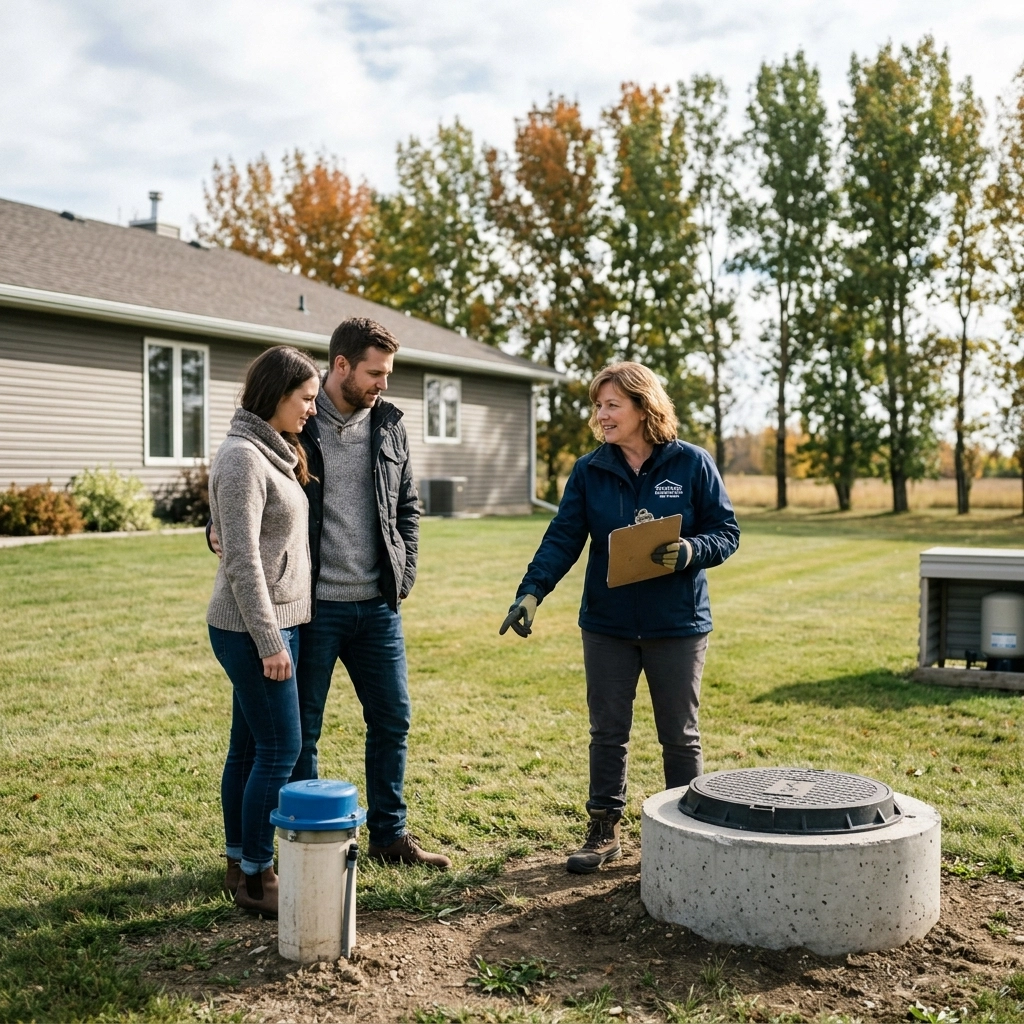
So, you’ve finally found it, that perfect piece of Alberta sky, a few acres of land, and a house that feels like home. Buying an acreage near Edmonton is a dream for many, but here’s the reality check: when you move out of the city limits, you aren't just buying a house; you’re becoming the manager of your own mini-utility company.
Unlike a house in central Edmonton where the city handles your water and waste, an acreage relies on private systems. If those systems fail, you aren't just looking at a minor inconvenience, you’re looking at repair bills that can easily hit $30,000.
At InspecUs, we’ve spent over a decade crawling through crawlspaces and trekking across fields. We’ve seen the "perfect" dream home turn into a financial nightmare because the septic field was failing or the well had run dry.
Here is everything you need to know about navigating an Edmonton acreage inspection like a pro.
A typical home inspection covers the "bones" of the house, the roof, the electrical, the HVAC, and the structure. While that’s vital, an acreage buyer needs to go deeper.
"On an acreage, the most expensive components are often the ones you can’t see," says our lead inspector at InspecUs. "A failed septic field or a contaminated well can cost more to fix than a brand-new roof and a furnace combined."
Because we are InterNACHI certified and have over 10 years of experience in the Edmonton region, we’ve developed a specialized approach for acreage inspections in Edmonton. You need someone who understands Alberta’s specific soil conditions and the 2021 updated Private Sewage Standards.

In the city, you flush and forget. On an acreage, you flush and… well, you need to know exactly where it goes. A septic system consists of a tank and a soil treatment area (the "field").
In Alberta, septic systems must meet strict safety and environmental standards. During our inspection, we don’t just look at the tank; we evaluate the entire ecosystem.
Pro Tip: You cannot properly inspect a septic tank unless it is pumped during the inspection. We often coordinate with a vacuum truck to empty the tank so we can see the interior walls and check for "backflow" from the field, which is a classic sign of system failure.
When you turn on the kitchen faucet on an acreage, that water is coming from an underground aquifer. You need to know two things: Is there enough water, and is it safe to drink?
A family of four generally needs a well that produces at least 5 gallons per minute (GPM). If the well only produces 2 GPM, you might find yourself running out of water halfway through a Saturday morning laundry session. We perform flow tests to see how the well recovers after heavy use.
Bacteria, nitrates, and high mineral content are common in rural Alberta. We facilitate comprehensive water testing to check for:

One of the biggest issues we find during pre-purchase home inspections on older acreages is a lack of proper spacing. Alberta has strict "setback" requirements to prevent your septic system from contaminating your water supply.
| Setback Type | Required Distance (Alberta Standard) |
|---|---|
| Water Well to Septic Tank | Minimum 30 metres (100 feet) |
| Water Well to Drainage Field | Minimum 90 metres (300 feet) |
| Septic System to Property Line | Minimum 1.5 metres (5 feet) |
| Drainage Field to Water Body | Minimum 30 metres (100 feet) |
If the property you're looking at doesn't meet these distances, it might be "grandfathered" in, but it could also mean you'll face massive hurdles if you ever want to renovate or replace the system.
During our decade-plus of service at InspecUs, we’ve learned to spot the "silent killers" of an acreage deal. If you see these, it’s time to ask the seller for a price reduction, or walk away.

Let’s talk numbers. Why do we stress these inspections so much? Because the costs of neglect are staggering in the Edmonton market.
Compare that to the cost of a professional inspection, and the value is clear. We provide same-day reports so you can make a move on the property (or negotiate the price) before another buyer steps in.
We aren't just looking for problems; we’re looking for solutions. Our team uses advanced tech, including thermal imaging and moisture detection, to find leaks in the home that might be taxing your well or septic system.
When you hire us, you get:

Buying an acreage is an adventure. It offers a level of peace and privacy you just can't get in the city. But that peace comes with responsibility.
Don't let the excitement of the land blind you to the infrastructure beneath it. Get the septic pumped, get the water tested, and hire a team that knows the difference between a "good" system and a "just for now" system.
Ready to book your Edmonton acreage inspection?
Don't leave your investment to chance. Contact the InspecUs team today to ensure your dream home doesn't come with a nightmare price tag. We’re here to help you move in with confidence.
We are licensed by the Licensed Professional and certified through InterNACHI

InspecUs Home Inspection is certified in the best practices established by Internachi. Our commitment to safety includes maintaining a 6-foot distance and using personal protective equipment (PPE) during all inspections.

© 2024 InspecUs - All Rights Reserved. | Sitemap | Developed by Integrated Marketing Platform Inc.